Manali in Winter: Our Snow Trip Guide
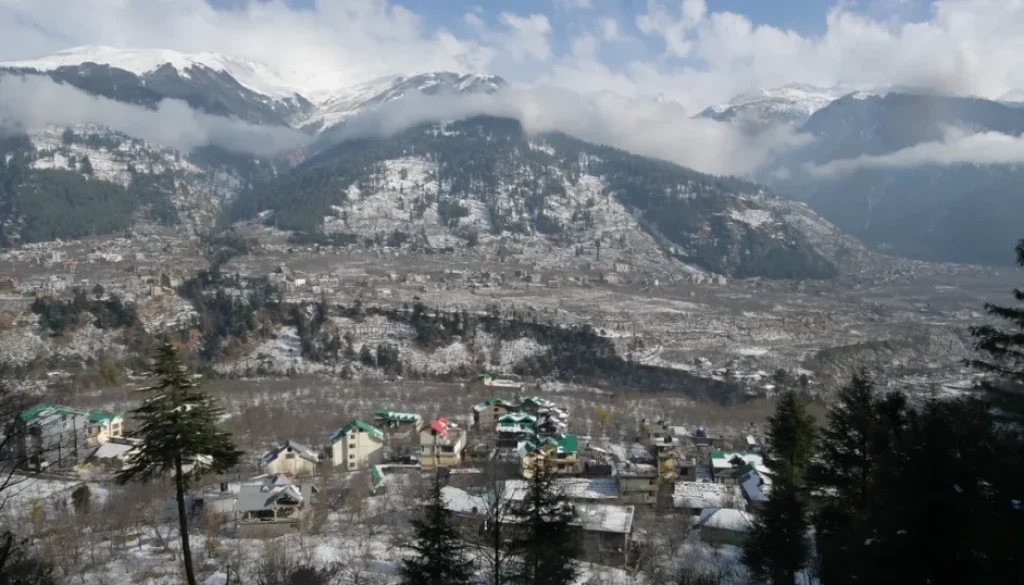
Manali in winter: the morning it snowed
Manali in winter is worth it if you go between mid-December and February, keep your plans loose, and let the snow decide the day.
In December 2020, six of us (Anamika, Megha, Shivam, Abhishek, Ayush and me) reached Manali late at night by cab. The roads were clear, with no snow anywhere. The next morning I opened the cottage door, and everything was white. I couldn’t resist: I climbed the hill behind our cottage, watched the snow melt off the pine trees, and somehow made it back down without falling.
This guide covers when Manali usually gets snow, how to reach it in winter, the places we loved (Hidimba Temple, Old Manali, and the snowy trek to Jogini Falls from Vashisht), what to pack, and the mistakes worth avoiding.
Manali in winter at a glance
|
Quick facts |
Manali in winter |
|---|---|
|
Snow in town |
Usually mid-December to early March; heaviest in January and February |
|
Temperature |
Around –7°C to 5°C in January |
|
Time needed |
3–4 days, plus a buffer day for snow or road closures |
|
From Delhi |
About 500 km: overnight Volvo bus or a 10–12 hour drive |
|
Nearest airport |
Bhuntar (Kullu), about 58 km |
|
Nearest railhead |
Joginder Nagar, about 145 km (Chandigarh is the practical one) |
|
Don’t count on |
Rohtang Pass (closed in winter) or Atal Tunnel (often shut after fresh snow) |
When does it snow in Manali?
For the best chance of snow in Manali town, go in January or early February. December is a gamble that sometimes pays off, as it did for us.
|
Month |
What to expect |
|---|---|
|
November |
Cold and clear. Snow only higher up, around Solang and Gulaba. |
|
December |
Light snowfall in town is possible, usually after mid-month. We got lucky in mid-December. |
|
January |
Coldest month and the most reliable snow. Roads close most often. |
|
February |
Still snowy, with more sunny days. Good for Solang and skiing. |
|
March |
Snow melting in town; still white higher up. |
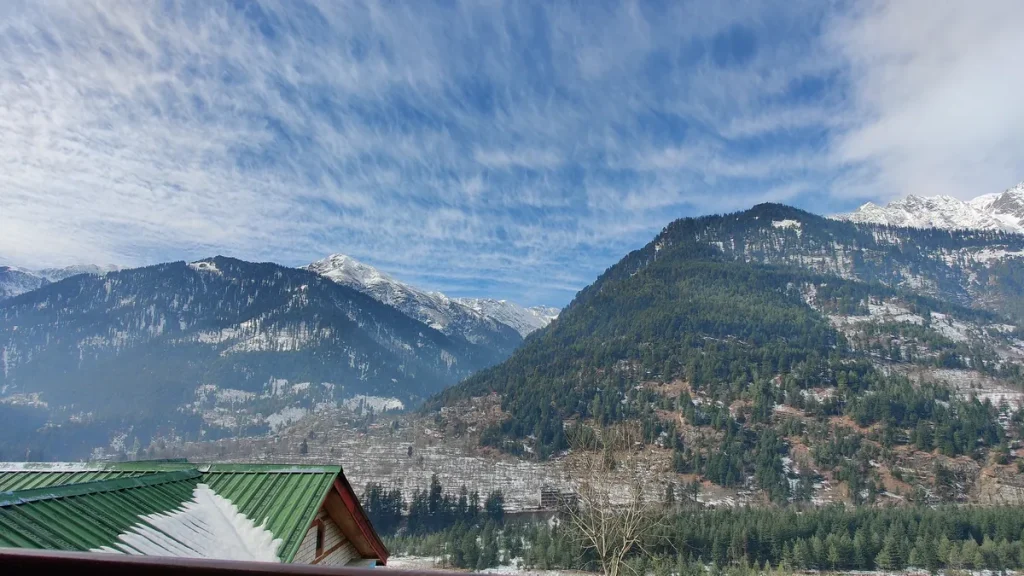
Two things we learned: snow can arrive overnight with no warning, and it can melt by afternoon in town. If you want guaranteed snow, head up to Solang Valley, which is snowy for most of the winter.
How to reach Manali in winter
Most people come by road from Delhi or Chandigarh. We booked a cab for the whole trip, which made sense for a group of six and gave us freedom to stop anywhere. Manali has no railway station, and its airport is an hour away in Kullu.
By bus from Delhi: HRTC and private Volvo buses leave Delhi in the evening and reach Manali the next morning. Plan for 14–17 hours in winter. It’s the cheapest and easiest option, and you save a night’s stay.
By car: About 500 km from Delhi, 10–12 hours without snow delays. In winter, the last stretch after Kullu can be icy, so leave early and avoid driving after dark.
By air: Bhuntar Airport in Kullu is about 58 km away. Flights are few and often cancelled in bad weather, so keep a backup plan.
By train: The closest useful station is Chandigarh, then a bus or taxi for about 8–10 hours.
Roads in winter: Rohtang and Atal Tunnel
- Rohtang Pass is closed from around mid-October until late May or June. Don’t plan around it.
- Atal Tunnel (to Sissu and Lahaul) is open in winter on paper, but it often shuts for days after heavy snow. Treat it as a bonus, not a plan, and ask your hotel that morning.
- Solang Valley is your safest snow day trip. It’s closer and usually reachable.
Things to do in Manali in winter
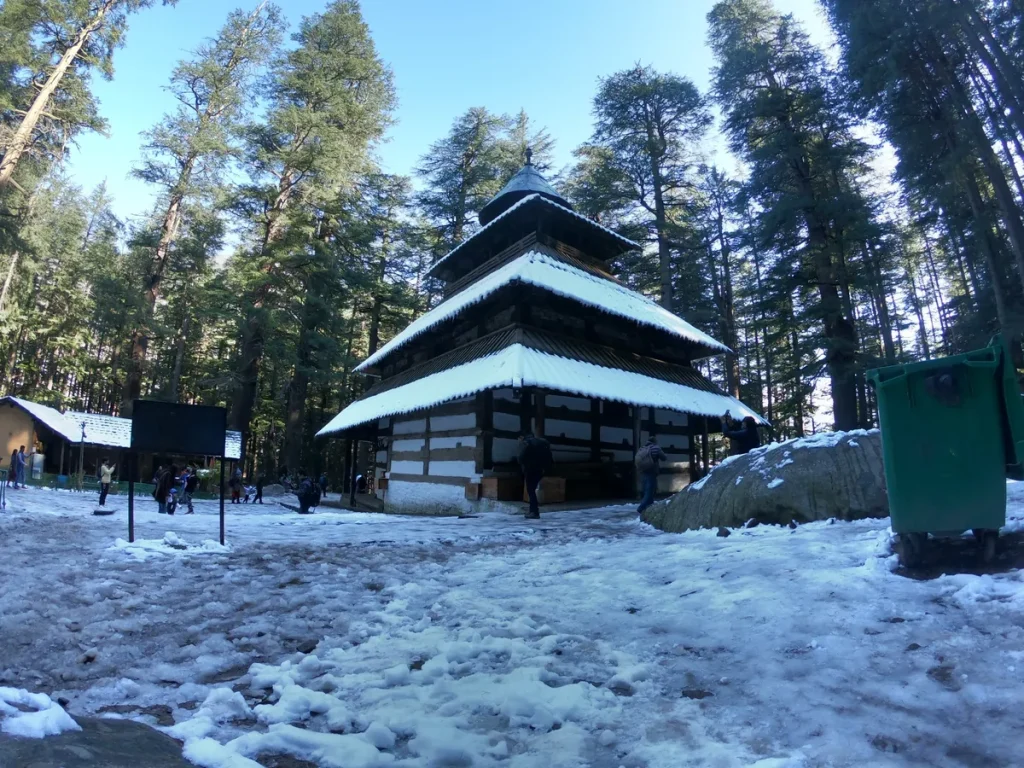
The best of Manali in winter is slow: snowy walks, warm cafes, and one good trek.
- Hidimba Devi Temple. A wooden pagoda temple in a cedar forest, even more beautiful under snow. Go early, before the crowds.
- The pine forest near Hidimba. On the way between the temple and Old Manali. We sat here with music and did nothing for an hour, and it was one of the best parts of the trip.
- Old Manali cafes. Wooden cafes along the stream, perfect for a long lunch when it’s too cold to do much else.
- Vashisht village. About 3–4 km from Manali, known for temples with hot water springs. The springs were closed when we visited, so check before you go.
- Jogini Falls snow trek. The highlight of our trip (details below).
- Solang Valley. Your most reliable snow, with skiing and snow activities in January and February.
Jogini Falls snow trek from Vashisht
The Jogini Falls trek starts in Vashisht village and passes through the village, its temple, and a dense forest before reaching a tall waterfall pouring straight over the rocks.
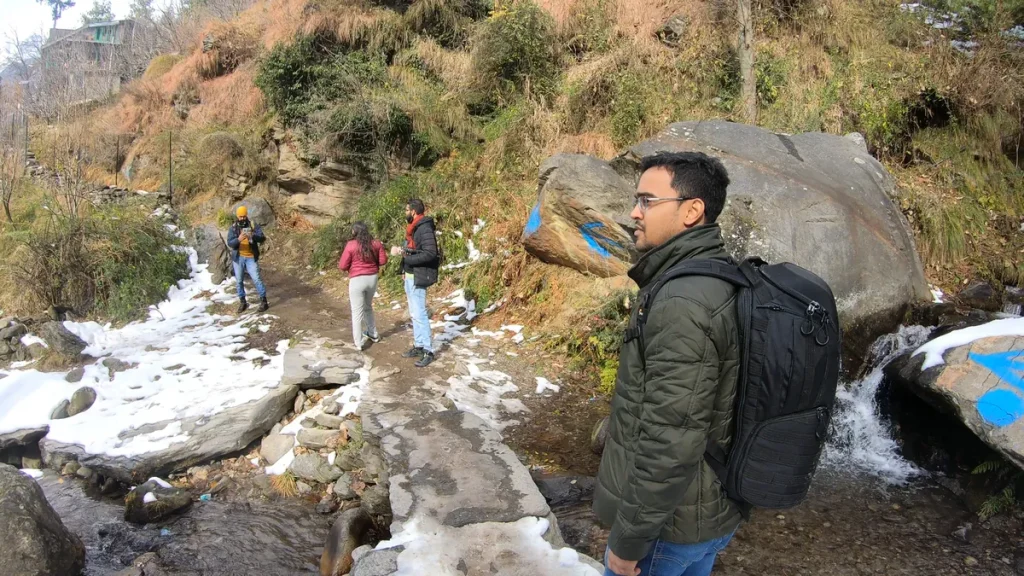
- Time: We were told 45 minutes. With snow, mud and a lot of falling, it took us longer. Give it about an hour one way in winter.
- Don’t stop early: Halfway up there’s a smaller waterfall with a great view. It’s not Jogini. Keep going.
- The last stretch has steps that get very slippery, so go slowly.
- Start by midday so you’re back before dark. We left the falls around sunset and it got tricky fast.
- Pack light: I carried two laptops, a camera and a drone. Don’t be me.
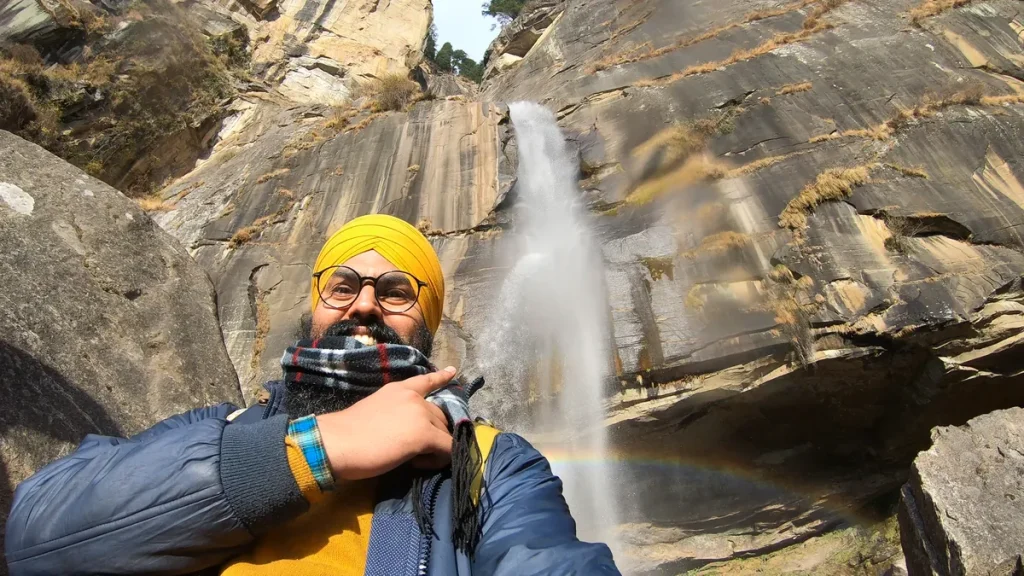
Watching the sun set behind the mountains with the waterfall’s spray behind me was the moment of the trip.
From Manali we headed on to Shoja and Jalori Pass, where we got stuck in the snow overnight. That story is in We Got Stuck in the Mountains.
What to pack and how to stay safe
The one thing that matters most is shoes with real grip. Most of our falls on the Jogini trail were from sneakers on packed snow.
Pack:
- Waterproof shoes or boots with good grip (or cheap crampons/shoe spikes from Manali market)
- Thermal inner layers, a fleece and a proper down or padded jacket
- Woollen cap, gloves and 2–3 pairs of warm socks
- Sunglasses and sunscreen: snow glare is strong
- A power bank: phones die fast in the cold
Stay safe:
- Don’t hike alone into the forest early in the morning or at dusk. Wild animals are around, which is why I turned back on my first-morning hike.
- Keep one free day in your plan. Fresh snow can close roads, and you don’t want to miss your bus home.
- Check road status every morning before heading to Solang, Atal Tunnel or beyond.
Our budget: about ₹8,300 per person for 4 days in Manali
Six of us shared a cab for the whole trip and split everything. Our four days in Manali (11–14 December 2020) cost about ₹8,300 per person, alcohol and shopping not included.
We carried on to Shoja and Jalori Pass afterwards. The full 10-day trip came to ₹18,655 per person.
|
Trip |
Cost per person (Dec 2020) |
|---|---|
|
Manali, 4 days (cab, stay, food, sightseeing) |
about ₹8,300 |
|
Full 10 days, Manali + Shoja + Jalori |
₹18,655 |
These are 2020 prices and exclude alcohol and shopping. Splitting a cab six ways is what kept it affordable, so travel as a group if you can.
Manali winter FAQ
Is Manali open in December? Yes. Manali town, hotels, cafes, Hidimba Temple and Old Manali stay open all winter, and we were there in mid-December. What closes is higher up: Rohtang Pass is shut until late spring, and Atal Tunnel and the roads beyond Solang can close for a few days after heavy snow.
Does it snow in Manali in December? Possibly. December usually brings light snow in town, more often after mid-month. We woke up to fresh snow in mid-December. For better odds, go in January or early February.
Which month has the most snow in Manali? January and February usually bring the heaviest snow.
Is Rohtang Pass open in winter? No. It’s closed from around mid-October to late May or June.
Is Atal Tunnel open in winter? On many days, but it often closes for days after heavy snowfall. Check the morning you plan to go.
How many days do I need in Manali in winter? Three to four days, plus one buffer day in case snow closes roads.
How long is the Jogini Falls trek? About 45 minutes one way in dry weather. With snow, plan for about an hour and start before midday.
Watch our Manali winter trip
We planned very little and it worked: the snow came on its own, the best afternoon was an hour in a pine forest, and the hardest trek gave us the best sunset of the trip.
Watch the snowy morning, Hidimba Temple and Old Manali in the video above, and the full Jogini Falls snow trek. After Manali, we got stuck in the snow near Jalori Pass.
Planning Manali this winter? Leave a comment or get in touch.